
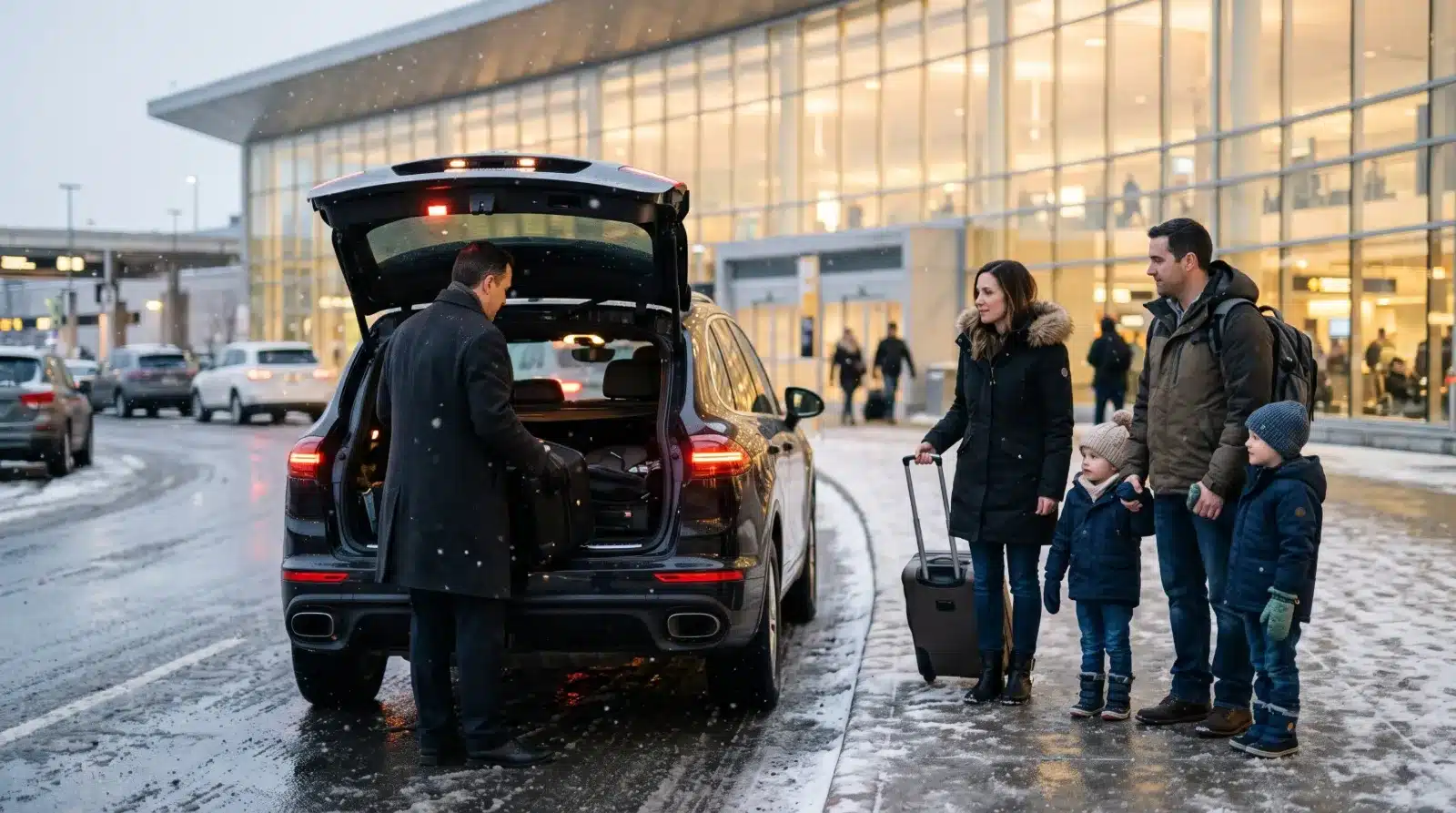
Plan it across three days: checks 48 hours before, packing and staging the night before, and a morning built around boarding time, not departure time. In snow, add 30 to 60 minutes to your normal drive time, plus 20 to 30 minutes to get the kids dressed and out the door.
For a 9 a.m. international flight in falling snow, that puts most Toronto families out the door around 4:30 to 5 a.m. Arrive 2.5 hours early for domestic flights and 3 to 3.5 for U.S. and international, and pack carry-ons for the delay you hope never happens.
Most winter travel advice is about the flight or the destination. The hardest part of a Toronto winter trip happens before any of that: getting your family, luggage, and children’s gear across a snowy city and through Pearson on time. This departure checklist from VVIP Toronto Limo is built around the three days that decide whether the trip starts calmly or in a scramble.
Why winter departures from Pearson need a plan of their own
Pearson is Canada’s busiest airport, and winter is its hardest season. One serious snow event can ripple through the departure board all day. Aircraft arrive late, crews time out, gates back up. For a family, that means a toddler who has burned through her snacks before boarding and a connection that suddenly looks tight.
Winter also stretches everything on the ground. A 35-minute July drive can take well over an hour in snow, and security takes longer when every passenger is unpacking coats, boots, and extra layers. Your summer routine won’t work in January. The families who handle it best aren’t lucky. They leave bigger buffers than they think they need, and they make their decisions at home instead of at the curb.
48 hours before: the checks that prevent departure-day surprises
Two days out is when small checks have the most value. There’s still time to fix what they reveal.
The 48-hour checklist
- Read the forecast for departure day, not just your destination. If heavy snow is expected, plan an earlier departure from home and tell anyone driving you.
- Check in online as soon as your airline opens it and save boarding passes to your phone. Check-in queues are the easiest line to skip entirely.
- Confirm your flight details in the airline’s app and turn on notifications. Schedule changes often show up there first. And check your spam folder, because change notifications land there more often than you’d think.
- Re-check documents: passports, identification, and any consent paperwork if one parent is travelling alone with the children.
- Confirm your ride to the airport. Pickup time, terminal, and how many bags and seats you’re bringing.
- Charge everything: phones, tablets, headphones, and a power bank.
Also agree on a snow plan B now: if the forecast worsens, what time will you leave?
What our chauffeurs see at 5 a.m.: on a snowy winter morning, the Terminal 1 departures curb is already busy. Cars move slowly on slippery roads, and the last stretch from the highway exit to the curb can take 10 to 15 minutes on its own. When the departures lineup backs up, our chauffeurs often drop families at the arrivals level instead to skip the rush.
The thing families forget most often on these mornings? Passports. Put them in the bag that never leaves your side the night before, and check for them once more before anyone gets in the car.
The night before: pack, stage, and protect the morning
The goal tonight is simple: tomorrow morning, nobody should have to think. Thinking is slow, and winter mornings punish slow.
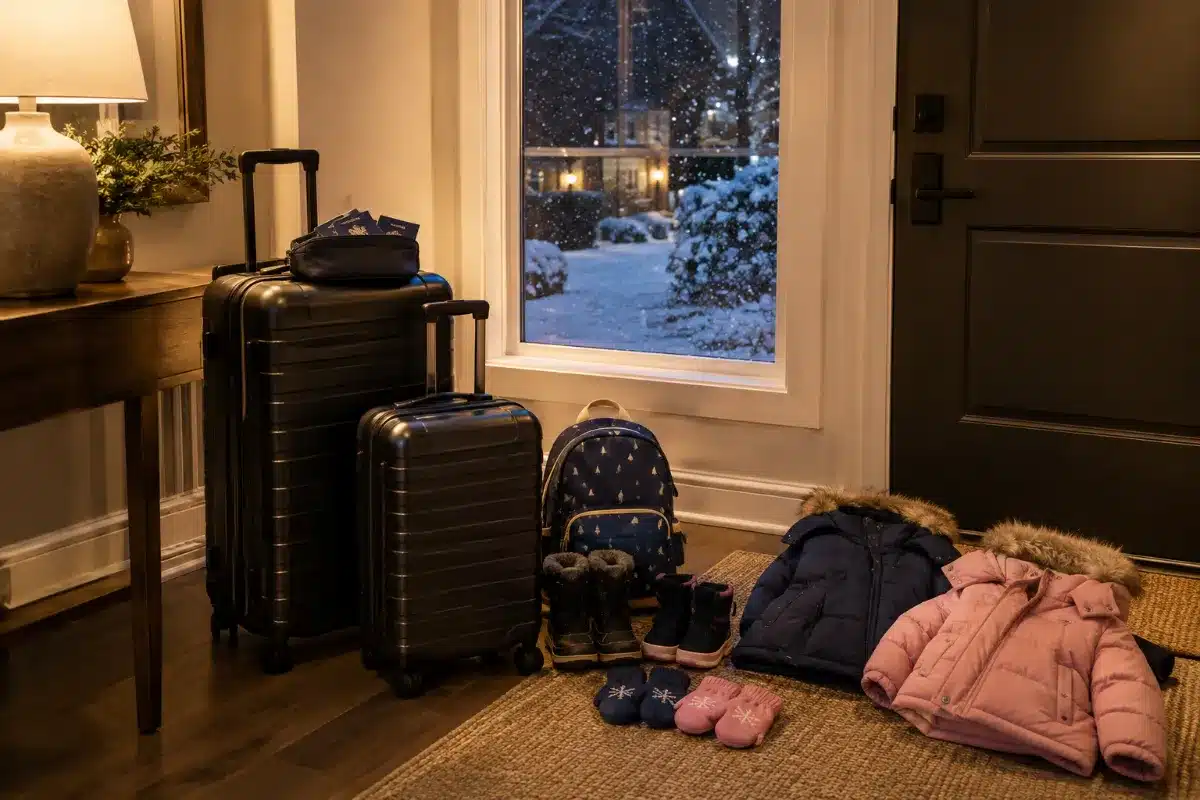
Finish all packing and close the suitcases. Lay out complete outfits for every child, and stage everything by the front door in loading order: bags first, then coats, hats, and mitts. Put documents, chargers, and medications in one bag that never leaves your side.
Set two alarms, and agree on a wake-up time that assumes the roads are bad. If they’re not, you get a slower breakfast at the airport.
One winter-specific tip: decide tonight what happens to the heavy coats. If you’re flying somewhere warm, leave them with the person dropping you off, pack them into a checked bag at check-in, or use airport coat storage where available. What you don’t want is four parkas draped over your arms through security because nobody decided.
Finally, put breakfast within reach and get the children to bed on time. A departure day is long even when it goes well.
Morning-of timing math: how early is early enough in snow?
Work backwards from boarding, not from departure. Boarding usually begins 30 to 45 minutes before the flight leaves, and your family needs to be at the gate, settled, before it starts.
| Situation | Normal | Snow day |
|---|---|---|
| Drive to Pearson | 35 minutes (a July drive) | Well over an hour |
| Security screening | Standard lines | Longer: everyone unpacking coats, boots, and extra layers |
| Leave-home buffer | Your normal drive time | Your normal drive time plus 30 to 60 minutes |
| Getting kids out the door | Part of the normal routine | Add 20 to 30 minutes |
So for a 9 a.m. international flight in falling snow, many Toronto families should be out the door by about 4:30 to 5 a.m. That sounds early because it is. But it’s still the version of the morning where nobody cries. Build the plan around the worst reasonable road conditions and let a clear morning be a pleasant surprise.
Check flight status once more before leaving. Check-in and bag-drop deadlines don’t always move with a delayed departure time.
What to pack in carry-ons when a delay is possible
In winter, pack your carry-ons for the delay you hope never happens. If your flight is held and your checked bags are already gone, whatever is in the cabin is your family’s entire survival kit. That can mean several extra hours. Occasionally a night.
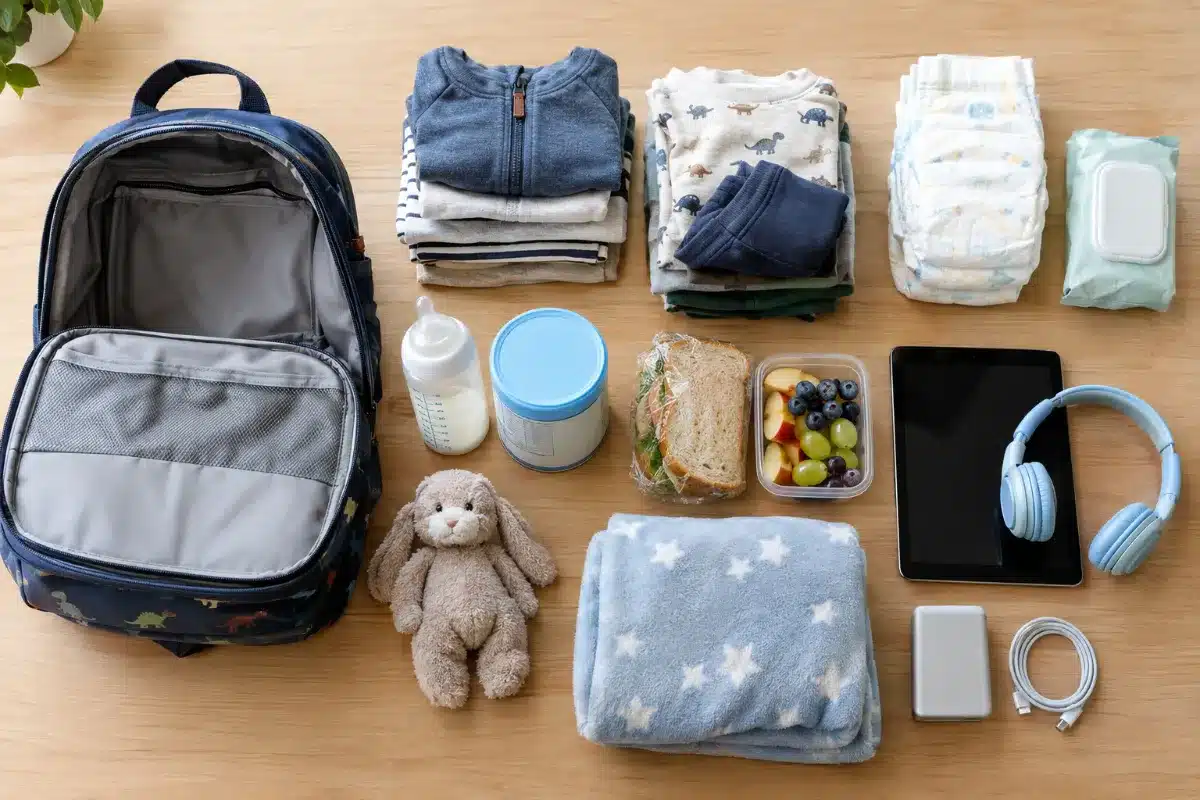
The delay-proof carry-on
- A full change of clothes for each child, and a spare shirt for each parent.
- More diapers, wipes, and formula than the flight could need, plus medication, in hand luggage only.
- Real food, not just snacks: sandwiches, fruit, and something that can serve as a meal if the dinner hour passes in the terminal. Buy drinks after security.
- Entertainment with no Wi-Fi required: downloaded shows and games, headphones, and one small beloved toy.
- Chargers and a power bank.
- A small comfort layer. Terminals and cabins run cold in winter, especially during long holds.
At security, Canadian Air Transport Security Authority (CATSA) guidance is worth knowing in advance: baby food, formula, and milk for children under two are exempt from the usual liquid limits, and family screening lines are set up for exactly your situation. Expect coats and boots to go in a bin, so dress children in shoes that come off easily.
Car seats, strollers, and winter gear: decide before you leave home
No family decision causes more curb-side stress than the car seat. There are four reasonable options and all of them work. The only rule: decide at home, not in falling snow.
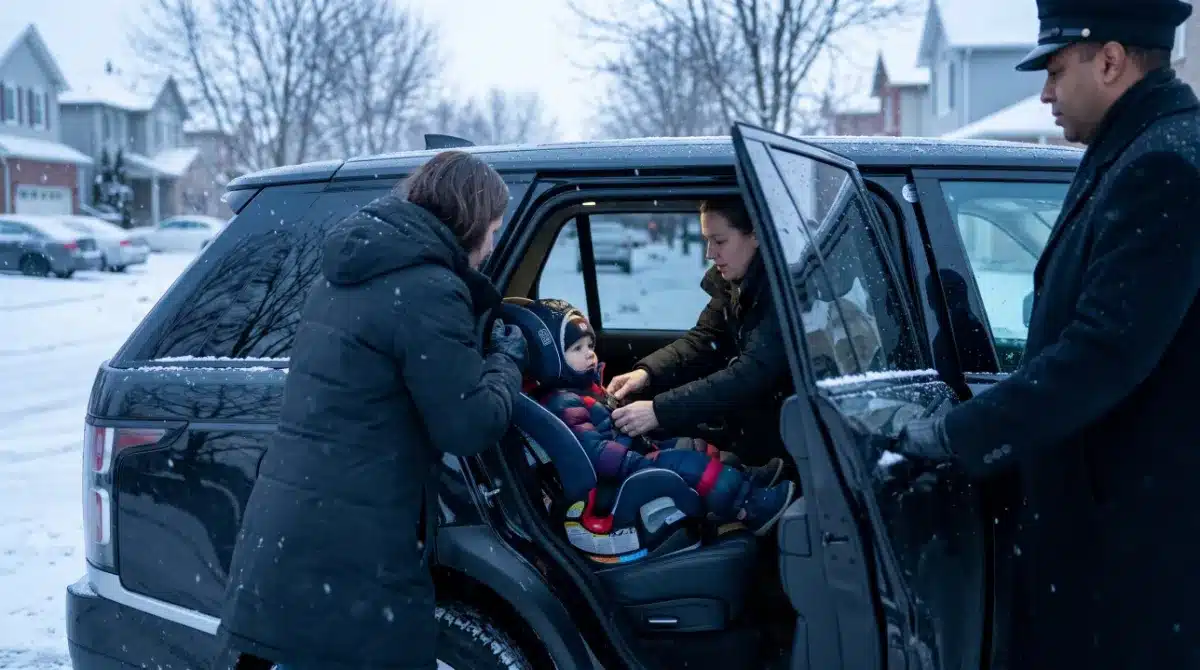
- Bring your own seat and check it in a padded travel bag. A checked seat can be dropped, stacked, and snowed on in transit.
- Gate-check the stroller (and sometimes the seat). Your child rides to the gate, but gate-checked items can take time to reappear, so never gate-check anything you need in the first hour after landing.
- Use the seat on board. If you’ve bought the child a seat and the car seat is approved for aircraft use, this keeps a toddler contained and familiar. The trade-off is carrying it through the terminal.
- Arrange a seat at the other end of the ride. For the Toronto ground leg, booking a car seat limo service in Toronto means the right seat is already installed when the vehicle arrives, so your own seat can stay home, stay clean, or travel protected in the hold. Families with infants and toddlers often combine approaches: their own seat checked for the destination, and provided seats for the airport rides.
Whichever you choose, photograph your seat and stroller before the trip. If anything is damaged in transit, a dated photo makes the conversation with the airline much shorter.
Booking a vehicle with the seats already installed? Our step-by-step guide to booking a car seat limo covers what to tell dispatch and what to check at pickup.
Getting to Pearson in winter: driving, rideshare, or a pre-booked car service
There’s no single right answer. There’s only the right answer for your family, your flight time, and the forecast.
If you’re comparing providers, look for a proper airport transfer service rather than a generic ride: confirmed pickup windows for early flights, space guaranteed for winter luggage and strollers, and clarity about changes.
For Pearson specifically, an experienced Pearson airport limo service will ask which terminal you’re flying from and build the pickup time around winter drive times to it. Those small questions reveal whether the company actually knows the airport.
Whichever option you choose, choose it the day before. Departure morning is for executing a decision, not making one.
From our booking desk: when families book a winter airport pickup, they often forget to mention the details that matter most on the day: how many car seats they need and the children’s ages, extra bags or a stroller, which terminal they’re flying from, and the flight number. Share all of them when you book.
Then check the weather forecast again the evening before. If snow is coming, ask for an earlier pickup time while there’s still room to change it.
When things go wrong on departure day
Even a perfect plan meets winter eventually. If your flight is delayed or cancelled while you’re at Pearson with children, the first hour matters most. Feed the children before you problem-solve. A fed child negotiates better than a hungry one, and so do parents.
While one adult handles food and the kids, the other should open the airline’s app immediately. On a storm day the best alternative seats disappear in minutes, and the app is often faster than the desk. Ask clearly about meal vouchers and hotels if an overnight stay looks likely, and keep receipts.
If the cancellation comes before you’ve left home, you’ve won a small lottery: rebook from your couch, with a fridge nearby. That’s one more reason to check flight status before the family is dressed and loaded. If your ride needs to change with the flight, contact your driver or service early. In storm conditions, the families who communicate first get re-accommodated first.
Frequently asked questions
How early should families arrive at Pearson for a winter flight?
Arrive about 2.5 hours before a domestic departure and 3 to 3.5 hours before a U.S. or international flight. Winter security moves slowly because of coats and boots, and children need stops adults forget to budget for.
What time should we leave home if snow is forecast on departure day?
Take your normal drive time, add 30 to 60 minutes for snow, then add 20 to 30 minutes for getting children dressed and out the door. Set that leave time the night before. Not as a decision to debate in the morning.
Should we bring our own car seat, check it, or arrange one?
All three work if decided in advance. Bringing your own seat suits trips where you will drive at the destination; check it in a padded bag. For the Toronto airport ride itself, many families arrange a vehicle with the correct seat already installed, removing the bulkiest item from departure morning.
What should be in a child’s carry-on for a winter departure?
Pack for a long delay: a full change of clothes, extra diapers and formula, medication, real food as well as snacks, downloaded entertainment, and a warm layer. If your flight is held, that carry-on is everything your child has.
Can baby food and formula go through security at Pearson?
Yes. Under CATSA guidance, baby food, formula, and milk for children under two are exempt from the standard liquid restrictions, though they may be inspected. Pack them where you can reach them at the belt, and expect coats and boots to go through in a bin.
Is it better to drive to Pearson or book a ride in winter?
Driving gives you control and your own installed car seats, but adds snow clearing, slow highways, parking costs, and a cold walk with luggage. A pre-booked ride removes the driving and parking and can include child seats and a vehicle sized for your bags, at a higher price. In a storm forecast, most families with young children value certainty over savings.
A calm departure is a planned departure
Winter flying with children from Toronto will never be effortless, but it can be orderly. Check the forecast and your flight 48 hours out. Pack and stage the night before. Do the timing math honestly, and decide your car seats and your ride before departure morning. Do those things and the snow becomes scenery outside the terminal window instead of the story of your trip.
A note from VVIP Toronto Limo: winter airport departures are the work we do every day of the season, and this guide reflects what we see families struggle with most. If you’d like help with the ground leg, check our rates and book a vehicle sized to your family, luggage, and the weather. Safe travels.