
The short answer
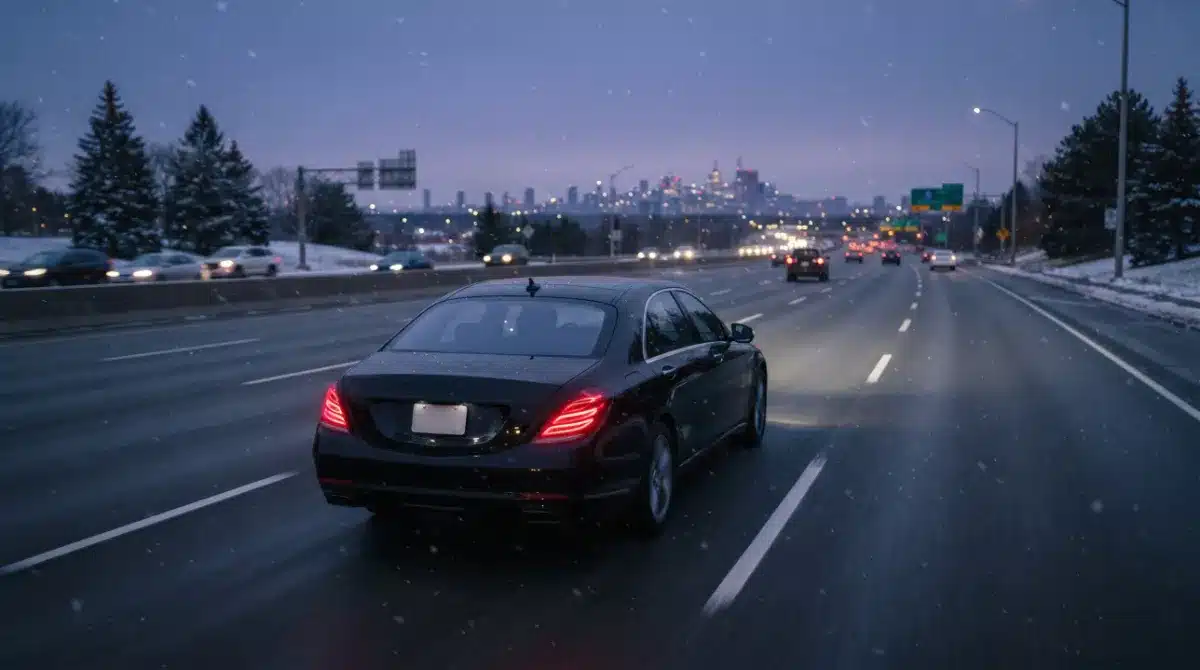
At Toronto Pearson, licensed airport taxis and limos don’t run a meter for most trips. They charge a flat rate set by your destination zone, and that price includes tax.
City taxis picked up away from the airport run the meter instead. On a clear day the two land close together. In a storm or a 401 crawl, a metered ride can run close to $30 above the flat fare for the same trip.
If you have ever paid two very different prices for the same ride to or from Pearson, the reason usually isn’t the driver or the distance. It’s the pricing system you happened to ride under. Here is how each one works, what the real numbers look like, and how to pick the one that suits your trip.
Flat rate, meter or pre-booked: the 30-second comparison
| Airport zone flat rate | City taxi meter | Pre-booked flat rate | |
|---|---|---|---|
| How the price is set | By destination zone on Pearson’s posted tariff | Start charge, plus distance, plus waiting time | Quoted for your exact trip when you book |
| Traffic and weather | Price stays the same | Price climbs with every slow minute | Agreed before the trip |
| Where you get it | Licensed queue at the Arrivals curb | Hailed or booked in the city | Booked ahead online or by phone |
| Best for | Simple trips on a normal day | Short city hops in light traffic | Families, early flights, winter, business travel |
The two ways Pearson taxi pricing works
Pearson runs a licensed ground transportation system. Taxis and limos allowed to pick up at the terminals carry a GTAA plate and work from a zone fare map. Your destination falls into a zone, the zone has a set price, and that price holds whether the drive takes 25 minutes or an hour.
Metered pricing works the opposite way. The fare is built live from three parts: a start charge, a charge for every bit of distance, and a waiting charge whenever the car is stopped or crawling. Anything that stretches the trip stretches the fare with it.
Which cars use which system?
Licensed airport taxis and limos picking up on the Arrivals level use the zone flat rate for destinations inside the mapped area. City taxis you flag down or book away from the airport run the meter. If your destination sits outside the zone map, an airport car may quote a long-distance fare or run the meter instead, so confirm which one applies before you set off.
Heading to Pearson from the city
The trip out works differently. Toronto’s taxi bylaw sets flat fares from the city to Pearson, and passengers can choose that flat fare instead of the meter. Ask the driver for the flat rate sheet when you get in. Some Toronto cab companies say the driver runs the meter anyway and you pay whichever is lower, so it pays to ask before you leave. If you ride the meter without asking, the worked examples below show what that can cost.
Pearson zone flat rates, explained
The zone map covers Toronto and the surrounding cities. Fares rise with distance, and every licensed airport taxi works from the same map, so two quotes for the same trip should match. Pearson’s own fare estimate says its taxi and limo rates are guaranteed regardless of traffic or weather and include all taxes. Airport limos are premium black cars and cost about 10% more than a taxi.
| Destination from Pearson | Taxi | Airport limo |
|---|---|---|
| Downtown (Union Station) | $70 | $77 |
| Yonge and Eglinton | $63 | $70 |
| North York Centre | $61 | $67 |
| Etobicoke (Dundas and Kipling area) | $45 | $49 |
| Mississauga (Square One) | $52 | $58 |
| Mississauga (Port Credit) | $56 | $62 |
| Oakville (Trafalgar Road) | $71 | $78 |
| Scarborough Town Centre | $82 | $90 |
| Richmond Hill (Highway 7 and Leslie) | $82 | $90 |
| Markham (Town Centre) | $85 | $93 |
Does the flat rate change in bad weather?
No, and that’s the point of the system. Pearson guarantees its taxi and limo rates regardless of traffic or weather, with no surge pricing. Snow, a crash on the 401 or a construction detour doesn’t change the zone price. The driver absorbs the slow trip, not you. Keep that in mind as you read the metered examples, because winter is exactly when the two systems pull apart.
How a metered fare adds up
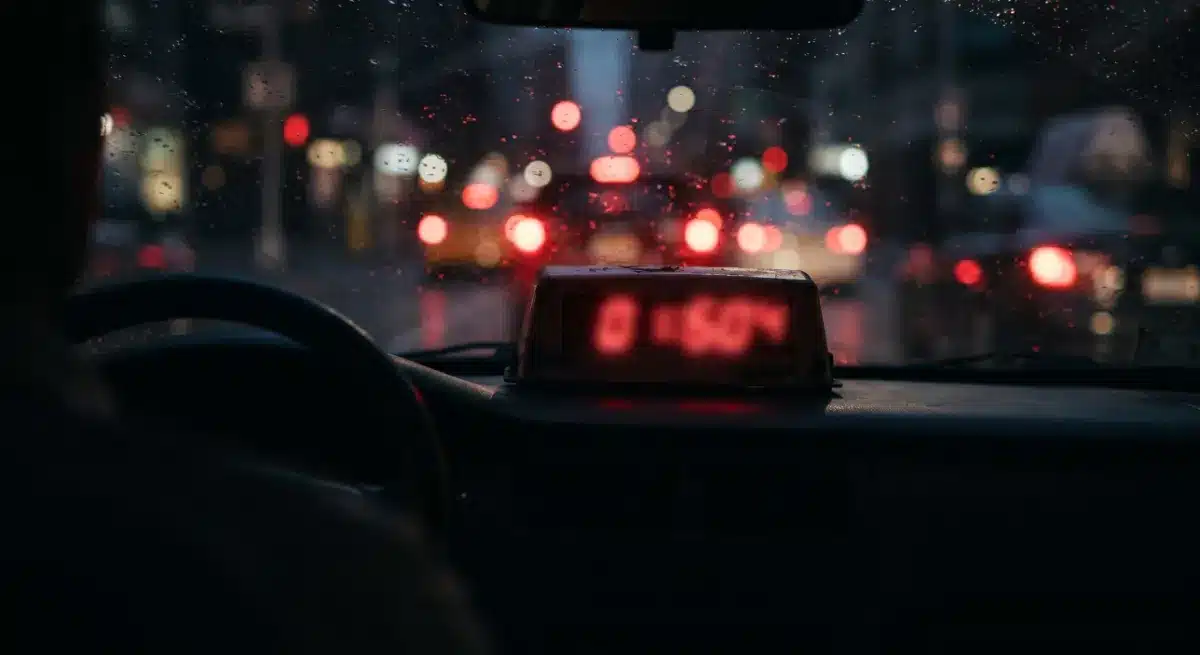
Toronto’s meter rate is set by the City: a $4.25 start, then $0.25 for every 143 metres, which works out to about $1.75 a kilometre. Waiting time is charged too, roughly $0.50 a minute while the car is stopped or barely moving. That’s about $29 for a full hour stuck in traffic.
Here is what that math does to a 28 km trip, about the distance from downtown to Pearson, if you ride the meter without asking for a flat fare, before tip:
| Scenario | Start and distance | Waiting time | Meter total (approx.) |
|---|---|---|---|
| Off-peak, roads clear | $4.25 + $49 | Minimal | About $53 |
| Weekday rush hour | $4.25 + $49 | 20 min, about $10 | About $63 |
| Winter storm, slow going | $4.25 + $49 | 45 min, about $22 | About $76 |
| Severe gridlock or storm crawl | $4.25 + $49 | 90 min, about $45 | About $98 |
Read the table honestly
On a clear day the meter can beat a downtown zone fare of about $70. What the meter never gives you is a ceiling. The same trip has no maximum, and the worst version costs nearly double the best.
When the meter costs you more than the flat rate
Rush hour on the 401 and 427
Pearson sits right beside the 401 and 427 interchange. A metered trip that hits those highways at peak time collects waiting charges at every merge and ramp queue. Twenty lost minutes is ordinary, and that alone pulls the meter up to the zone fare. The flat rate doesn’t notice any of it.
Construction and detours
Toronto’s construction seasons run long, and a detour adds both distance and waiting time to a metered fare. A driver following a closure is doing the right thing, and the meter bills you for it anyway. Zone pricing removes the argument, because the route no longer affects the price.
Winter storms
Storm driving is slower driving, and slower means more waiting time on the meter. Our worked example puts a storm trip near $76 at 45 minutes of waiting, close to the downtown zone fare, and near $98 when the crawl stretches past an hour. If you are travelling between December and March, that open-ended top end is the strongest argument for a fixed price.
Can a driver choose to run the meter instead?
For a trip inside the mapped zones, licensed airport cars are expected to charge the zone fare. Pearson tells passengers to ask about the flat rate fare information in the vehicle. If a driver suggests the meter for a standard trip across the city, ask why before the car moves. Trips beyond the mapped zones are the legitimate exception.
The extras neither number includes
- Tips: extra under every system.
- Highway 407 tolls: usually passed on at cost if your driver uses the toll road to save time.
- Tax: already included in Pearson’s zone fares, so check what a quote includes before you compare it.
Travelling as a group or with lots of luggage? Pearson’s fare estimate lists a $15 surcharge for 4 or more checked bags or any oversize piece, and another $15 for 5 or more passengers. The driver must tell you before loading, and each surcharge can only be charged once per trip.
Flat rate, meter or rideshare: the predictability spectrum
Think of the options as a spectrum of certainty. The zone flat rate is fixed before the trip and immune to traffic. The meter is honest math that floats with conditions you can’t control.
Rideshare sits at the far end. The price is quoted up front, then repriced by surge when demand spikes. At an airport, that usually means exactly when your flight lands in bad weather, or when a wave of flights arrives together. We ran the rideshare side of this in full, surge math included, in our limo vs Uber cost breakdown.
The third option: a pre-booked flat rate

There is a third way to buy the same certainty, and it’s the option we sell, so here is the honest version. A pre-booked car service quotes a flat price for your exact trip before you travel: your address, your vehicle, your flight. It costs more than the curb taxi’s zone fare for the same route. The premium is real, and so is what it buys.
- Your fare is confirmed in writing before you book. No meter runs during the trip.
- Your flight is tracked, so a delay doesn’t cost you extra, and you get 30 minutes of free waiting after a domestic landing and 45 after an international one. Here is how your chauffeur meets you at Pearson.
- No taxi line. Your chauffeur is ready for you, and meet and greet inside the terminal is available on request. See the Pearson pickup map for Terminal 1 and Terminal 3.
- You choose the vehicle, with car seats fitted on request if you are travelling with kids.
None of that makes the curb taxi a bad choice. Land at noon on a clear day with a carry-on and the zone fare is good value. The pre-booked option earns its premium on the hard trips: early mornings, winter storms, kids and luggage, and anyone who wants the ride settled before they fly.
How to avoid overpaying at Pearson
- Use the official pickup area. If you didn’t pre-book, go to the designated taxi and limo area on the Arrivals level curb.
- Check the car is licensed. Look for the GTAA plate on the bumper and the decal on the window.
- Settle the fare type first. Ask about the flat rate before the car leaves the curb, and use Pearson’s fare estimate tool if a number sounds off.
- Say no to drivers who approach you inside. Unofficial drivers are behind most overcharging stories: no zone map, no agreed fare and a number invented at the destination.
If price certainty matters for the trip home, book the return the same way. Pre-booked airport transfers run on confirmed flat pricing, and the driver tracks your flight, which matters when a storm delay moves your arrival by two hours.
Frequently asked questions
Do Pearson taxis use meters?
No, not for most trips. Licensed taxis and limos picking up at Pearson charge a flat rate set by the destination zone on the airport’s posted tariff. The meter applies to city taxis you hail or book away from the airport.
Is the meter or the flat rate cheaper between downtown and Pearson?
On a clear, off-peak day the meter can come in lower, around $53 by our worked example, against about $70 for the downtown zone fare. In rush hour they land close together, and in a bad storm the meter keeps climbing. The flat rate buys certainty, not a discount.
Do Pearson flat rates include tax?
Yes. Pearson’s posted taxi tariff says all fares are in Canadian dollars and include taxes. Tips are extra, and so are Highway 407 tolls if your driver uses the toll road.
Are Pearson limos more expensive than taxis?
A little. Toronto Pearson says its licensed airport limos are premium black cars that charge about 10% more than a taxi on the same zone fare.
What if my destination is outside the zone map?
The driver may quote a long-distance fare or run the meter. Both are legitimate outside the mapped zones. Agree on the system and the expected total before the car moves.
Can I insist on the flat rate?
For a trip inside the mapped zones, yes. That is the standard system for licensed airport cars. If a driver suggests the meter for a normal in-zone trip, ask why before you leave the curb, and take the next car if the answer does not satisfy you.
Planning the trip home
However you ride, the fare system is settled before the wheels move. That’s the moment to get it right.
Comparing options for a Pearson trip? Our airport transfer service explains how pre-booked transfers work, and the Pearson airport limo service page covers meet and greet arrivals. Current vehicle pricing is on our rates page, and fixed-price rides can be arranged through booking.
Pearson fares in this guide come from Toronto Pearson’s online fare estimate, checked October 25, 2026. Meter figures use the City of Toronto meter rate. Confirm the exact fare for your trip when you book or at the curb.
