
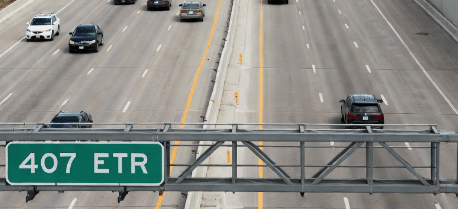
Traveling from the northern reaches of York Region to Toronto Pearson International Airport (YYZ) has always been a test of patience. If you live in Markham, Newmarket or Aurora, you know the drill: the distance isn’t the problem, it’s the unpredictability of the GTA’s 400-series highways. However, as we move through 2026, the data is clearer than ever. Taking the 407 ETR (Express Toll Route) is no longer just a luxury, it is a strategic necessity for anyone who values their time and needs to guarantee a 40-minute arrival window.
Why the 407 ETR is the Gold Standard for Airport Runs
The primary advantage of the 407 ETR is its bypass of the “bottleneck belt.” When you travel from Aurora via Wellington Street or from Stouffville via Main Street, your traditional route involves southward travel to the 401 or 407.
While the 401 remains the most heavily congested corridor in North America, the 407 ETR maintains a 99% trip reliability rate. In 2026, where hybrid work schedules have made “rush hour” feel like an all-day event, the 407 ETR offers a consistent flow that local roads and the 401 simply cannot match. On average, commuters from Markham and Whitchurch-Stouffville save up to 50% of their travel time during AM peaks and a staggering 64% during PM peaks by opting for the toll route.
Route Breakdown: Markham to Pearson (YYZ)
For those starting in Markham, the most efficient path is:
- The Entry: Head south on Ninth Line or Hwy 48 to the 407 ETR entry at Donald Cousens Parkway.
- The Stretch: You will traverse through Zones 9, 8, and 7. This takes you across the top of Markham and Richmond Hill.
- The Connection: Transition smoothly toward Hwy 427 South, which leads directly into the Pearson terminals.
Estimated Time: 35 to 45 minutes (vs. 75 to 90 minutes via Hwy 404 to 401).
Route Breakdown: Aurora to Pearson (YYZ)
For Aurora residents, the choice is even simpler:
- The Entry: Take Hwy 404 South to the 407 ETR interchange.
- The Stretch: You enter at the border of Zone 7/8 and head west through Vaughan.
- The Connection: Exit at Hwy 427 South for the quickest terminal access.
Estimated Time: 30 to 40 minutes (vs. 65 minutes via local bypasses).
Understanding the 2026 407 ETR Costs
It is important to be aware of the updated 2026 rate schedule. As of January 1, 2026, the 407 ETR has implemented a tiered pricing structure based on 12 distinct zones.
- Peak Times: During the 7:00 AM and 3:30 PM rushes, per-kilometre rates for light vehicles can reach approximately 1.46¢ to 1.63¢ depending on the zone.
- The Transponder Advantage: If you are making this trip more than three times a year, a transponder is essential. It eliminates the per-trip “camera charge” and account fees. In 2026, the annual transponder lease is roughly $31.50, but it pays for itself almost immediately by lowering the cost of every airport run.
- Loyalty Points: New for 2026, the 407 ETR has launched a loyalty program through their mobile app. You can now earn points on your airport trips to redeem for future travel credits, making the “cost of time” slightly more manageable.
Safety and Maintenance: The Hidden Benefit
Beyond speed, the 407 ETR provides a safer environment for families and business travelers. The highway boasts a 60% lower collision rate than other 400-series highways. This is due to superior maintenance, 24/7 highway patrols, and the absence of the “stop-and-go” volatility found on the 401. During winter months, the 407’s dedicated 90-piece snow removal fleet ensures that even during a York Region snowstorm, the path to your flight remains clear.
Is the Toll Worth It?
To answer this, you have to look at the “Value of Time.” If a missed flight costs you hundreds in rebooking fees and a day of lost vacation or business, the $30-$50 toll from York Region is an insurance policy. For families traveling with small children or professionals with tight connections, the reduction in stress is immeasurable.
When you weigh the 2026 fuel costs of idling in 401 traffic against the free-flow efficiency of the 407, the “real” cost of the toll is often lower than it appears on your monthly statement.
Frequently Asked Questions: 407 ETR & Airport Travel
Is the 407 ETR really faster than the 401 for a morning flight?
Yes. Data from 2026 shows that 407 ETR users save an average of 25 to 60 minutes during rush hour compared to the 401. While the 401 often faces unpredictable delays, the 407 ETR maintains steady speeds even during peak periods.
How much does it cost to travel from Stouffville or Aurora to Pearson in 2026?
Toll rates vary by zone. For a light vehicle during the morning rush (7:00 AM to 9:30 AM), rates in central zones range from 108.79¢ to 112.79¢ per kilometre. Without a transponder, you will also incur a $5.30 camera charge per trip plus a monthly account fee.
What is the most cost-effective way to use the 407 ETR for airport trips?
Leasing a transponder is the best way to save. For $31.50 per year (or $5.00 monthly), you waive the camera charges and monthly account fees. It typically pays for itself in just three round trips to the airport.
Are there any discounts available for frequent travelers in 2026?
Yes. 407 ETR offers a Loyalty Points Program through their mobile app where you can earn points to redeem for free travel. Additionally, the Route Relief Program provides eligible low-income drivers with up to eight free trips per month.
Which terminal at Pearson is easiest to reach from the 407?
The 407 ETR connects directly to Hwy 427 South, which serves both Terminal 1 and Terminal 3. You can generally reach either terminal within 10 minutes of exiting the 407 ETR onto the 427.
Conclusion
If you are departing from Markham, Stouffville or Aurora, the 407 ETR remains the undisputed fastest route to Pearson Airport. By bypassing the congestion of the lower GTA and utilizing the streamlined 427 connection, you ensure that your journey starts on a calm, predictable note.
